All days

Morning Intelligence

YouTube feed · Monday, July 13, 2026

12 of 80 recommendations summarized

Science / Philosophy

The Most Controversial Idea In Physics

The Most Controversial Idea In Physics

SciencePetr · 26:42

Deep dive into the fine-tuning problem in physics: how the Hoyle resonance, neutron-proton mass difference, strong force strength, gravity's weakness, and the cosmological constant all appear precisely calibrated for complexity and life. Covers Weinberg's 1987 prediction of a positive cosmological constant and the 10^120 vacuum energy discrepancy — the 'worst prediction in physics.'

Alösha's take: If you're drawn to simulation/design arguments, this is the physics backbone — concrete numbers showing how narrow the life-permitting window actually is.

Science / Health

If YOU Plan To Have Kids, You NEED To See This

If YOU Plan To Have Kids, You NEED To See This

The Diary Of A CEO Clips · 22:11

Jeremy Grantham presents data showing male sperm counts have dropped from ~100M/mL in 1970 to 35M today, declining at 2.5% per year — projecting the median male hits zero viable sperm by 2045. Primary culprits: endocrine disruptors (phthalates, BPAs, PFAs, microplastics found in 100% of tested human testicular tissue) and pesticides. Harvard/Mass General studies showed a 2x sperm count difference between men eating clean vs. dirty-dozen produce; EU has banned 1,500 cosmetic chemicals vs. US banning only 12.

Alösha's take: Hard data on the fertility crisis with actionable takeaways on food choices and chemical exposure — worth knowing if you're planning a family.

AI / Product Design

The Weird Future Of User Interfaces

The Weird Future Of User Interfaces

Enrico Tartarotti · 15:08

Analyzes why AI devices (Humane Pin, Rabbit) and chatbot interfaces failed to replace GUIs, while coding tools like Claude Code are organically spreading to non-technical users. Introduces 'generative UI' — where AI dynamically generates custom graphical interfaces on the spot instead of forcing users into either static apps or chat boxes. Argues the future isn't buttons OR chatbots, but AI deciding which interface modality fits the task complexity.

Alösha's take: Basically describes my daily workflow with Claude Code + skills + MCPs, and frames why generative UI is the missing middle between dumb buttons and raw chat — worth watching for the product design lens.

Consciousness / Philosophy

The World is a Word

The World is a Word

Vosa · 25:38

A philosophical exploration of how language constructs our inner world and reality itself. Draws on Merleau-Ponty's phenomenology (speech as meaning-making, not translation), Helen Keller's first encounter with the word 'water,' and the etymology of 'truth' — tracing it from Proto-Indo-European 'deru' (firm/solid/tree) through moral trustworthiness to post-Gutenberg factual correctness. Argues our emotional vocabulary is strikingly impoverished compared to technical language, and that untranslatable words (saudade, Waldeinsamkeit, komorebi) reveal perception gaps between cultures.

Alösha's take: Ties together phenomenology, LLMs, and the construction of reality through language — if you think about how words shape consciousness (or how statistical next-token prediction relates to meaning), this one hits.

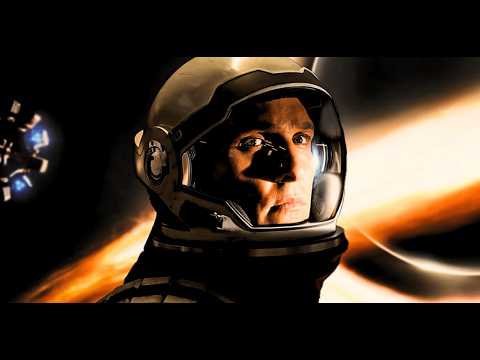
Interstellar Is Not About Space — It’s About God

Interstellar Is Not About Space — It’s About God

Forbidden Gnosis · 15:27

Reframes Interstellar as a theological film about kenosis (self-emptying sacrifice), not a sci-fi epic. Argues the wormhole represents grace, Mann is an Antichrist figure, and the tesseract is a closed causal loop where love expressed as sacrifice ripples across time — future humans reaching back to ensure their own existence. Cooper's arc is pure surrender: emptying himself of ego and certainty so he becomes a conduit for something larger.

Alösha's take: A dense philosophical lens on a film you already love — rewatch fuel if you're into the 'love as a dimension' thread Nolan wove through it.

Consciousness / Simulation

Do You Think People Ever Truly Die? The Terrifying Reality of Quantum Immortality

Do You Think People Ever Truly Die? The Terrifying Reality of Quantum Immortality

Sleeping Storian · 11:26

Walks through Hugh Everett's many-worlds interpretation and Max Tegmark's quantum suicide thought experiment to build the case for quantum immortality — that subjective experience can only follow branches where you survive. Then flips it dark: immortality without health means eternal decay, and if consciousness resets each night, the 'you' being protected may just be inherited information, not a continuous self.

Alösha's take: Hits the consciousness-continuity and simulation-theory nerve — the 'you dissolve every night' reframe alone is worth the 11 minutes.

The Real Jesus Was a Gnostic and He Exposed Your Creator | Prof Jiang Xueqin

The Real Jesus Was a Gnostic and He Exposed Your Creator | Prof Jiang Xueqin

Prof Jiang Explains · 16:29

Professor argues historical Jesus was a Gnostic who synthesized Platonism, Zoroastrianism, Buddhism, and Cynicism into a three-layered teaching. The secret layer: our reality was created by a flawed demiurge (Yahweh/monster), not the true God (monad), and we contain a divine spark that can liberate us from this false material world. Uses Gospel of Thomas to support the framework.

Alösha's take: Ancient simulation theory — the Gnostic demiurge maps surprisingly well onto modern simulation/consciousness debates about whether our reality is a flawed construct.

This Is What Your Existence Looks Like in Higher Dimensions: 0D–8D Explained in Detail...

This Is What Your Existence Looks Like in Higher Dimensions: 0D–8D Explained in Detail...

exo-SCIENCE · 16:36

Walks through dimensions 0D–7D, explaining how a human body/identity transforms at each level: from a sizeless point (0D) through flatland (2D), spacetime worldlines (4D), branching quantum timelines (5D), to the space of all possible universes (7D) where identity becomes pure abstract structure. Uses the Flatland analogy to argue higher-dimensional beings could see inside 3D objects and access parallel histories.

Alösha's take: Solid visual primer if you want to revisit the dimensionality-of-existence rabbit hole — nothing groundbreaking but a clean 17-min refresher on how physics and philosophy collide at higher-D.

AI / Models

Oh no (the new Grok model is good)

Oh no (the new Grok model is good)

Theo - t3․gg · 24:43

Theo reviews xAI's Grok 4.5, a 1.5T-parameter MoE model trained jointly with Cursor on trillions of tokens of developer interaction data. It benchmarks near Claude Opus 4.8 and GPT-5.5 on DeepSWE/Terminal Bench at a fraction of the cost ($2/$6 per M tokens vs Anthropic's $10/$50). Cursor inadvertently included its own codebase in training data, tainting Cursor Bench scores — xAI disclosed this transparently. The model excels at agentic multi-step engineering tasks and 3D generation, with efficient token usage.

Alösha's take: Direct competitor analysis for Claude — worth tracking how Grok 4.5's aggressive pricing and Cursor integration shift the agentic coding landscape.

Consciousness / Science

Создатель микропроцессора о сознании. Федерико Фаджин

Создатель микропроцессора о сознании. Федерико Фаджин

Booster Void · 1:19:51

Federico Faggin, creator of the first commercial microprocessor (Intel 4004), discusses his decades-long exploration of consciousness. He argues consciousness is fundamental and irreducible to computation or matter — a position he arrived at precisely because of his deep understanding of silicon and information processing. Covers his framework where awareness is primary and physics emerges from it.

Alösha's take: A legendary chip designer who concluded consciousness can't be computed — his technical authority makes this argument hit differently.

Philosophy / Ethics

The ONE RULE for LIFE - Immanuel Kant's Moral Philosophy - Mark Manson

The ONE RULE for LIFE - Immanuel Kant's Moral Philosophy - Mark Manson

After Skool · 21:49

Mark Manson explains Kant's categorical imperative — treat every person as an end, never merely as a means — grounding it in the idea that rational consciousness is the universe's only shot at intelligent self-organization. Applies the principle to laziness (treating your own mind as a pleasure receptacle is self-harm), addiction, people-pleasing, and consent, arguing each violates the same universal rule.

Alösha's take: Kant's argument that consciousness is what gives the universe purpose connects directly to simulation/consciousness debates — and the practical ethics are genuinely useful for founder decision-making.

Science / Simulation

The secret code behind the universe | Stephen Wolfram

The secret code behind the universe | Stephen Wolfram

The Well · 9:45

Stephen Wolfram explains his ruliology framework: simple computational rules (like cellular automaton Rule 30) produce irreducibly complex behavior, mirroring nature's complexity from snowflakes to mollusk shells. He argues the universe operates as a network of 'atoms of space' being rewritten by simple rules, and that computational irreducibility — our inability to shortcut predictions — is what gives life its richness and guarantees infinite future discoveries.

Alösha's take: Wolfram distills his whole paradigm into 10 minutes — computation as the substrate of reality, irreducibility as the source of meaning. Essential if you're into simulation theory.

Get my newsletter

New blog posts, projects, activities, and collaborations — straight to your inbox. No spam.

Alösha

© 2026 Alösha. All rights reserved.

|Privacy|