All days

Morning Intelligence

YouTube feed · Thursday, July 23, 2026

12 of 80 recommendations summarized

AI / Apple Hardware

Apple Just Killed AI Subscriptions Forever (Mac Mini M5)

Apple Just Killed AI Subscriptions Forever (Mac Mini M5)

AI Master · 17:35

Deep technical comparison of Mac Mini M4 Pro for local LLM inference: 273 GB/s bandwidth (not 550), 7B-32B models run well at 20-30 tok/s, 70B barely usable at 3-5 tok/s, can't run GPT-OSS 120B at all (AMD Strix Halo wins there). Apple killed 64GB config and hiked prices $200 citing DRAM shortage. Bloomberg reports Apple skipping M6 Pro/Max/Ultra entirely, fast-tracking to M7 targeting 1.5TB unified memory and Nvidia Blackwell-class performance. Key MLX creator Aani Hanan left Apple for Anthropic along with ~12 AI researchers.

Alösha's take: The M7 roadmap leak and MLX talent exodus to Anthropic are the real signals here — useful context for anyone weighing local inference hardware timing.

Consciousness / Philosophy / Science

The Revolution of Systems Thinking: Why It Changes Everything We Know About Reality

The Revolution of Systems Thinking: Why It Changes Everything We Know About Reality

Pantha Rhey · 20:34

Overview of the systems-theoretical perspective as a quiet scientific revolution against Cartesian reductionism. Traces the lineage from Descartes' dualism and Newton's clockwork universe through emergence, self-organization, and interdisciplinarity. Maps the landscape from established theories (chaos theory, cybernetics, game theory) up through IIT, panpsychism, and Whitehead's process philosophy in a 'funnel model' from hard science to metaphysics.

Alösha's take: Solid conceptual map connecting emergence, consciousness (IIT, panpsychism), and process philosophy — useful framing if you think about reality as interconnected systems rather than isolated parts.

Science / Philosophy

ДНК создал Бог? Самые свежие научные данные о строении. Как работает информация для жизни организмов

ДНК создал Бог? Самые свежие научные данные о строении. Как работает информация для жизни организмов

Говорит «атеист» · 27:00

Detailed visual explainer of DNA structure: nucleosome packaging, histone proteins, molecular machines (helicase, polymerase, motor proteins), and information density — comparing DNA's quaternary code to binary computing. Frames DNA's 3D information encoding and error-correction machinery as an open question between random chemistry and intelligent design, noting humanity has only read DNA linearly and doesn't yet understand its full 3D interaction language.

Alösha's take: Solid molecular biology deep-dive in Russian — the intelligent design framing is heavy-handed, but the visualizations and scale comparisons (2m of DNA in a 6000nm nucleus, each nucleotide smaller than a transistor) are genuinely striking.

Consciousness / Philosophy

I Stopped Praying and Called the Monad Instead — Here's What Changed

I Stopped Praying and Called the Monad Instead — Here's What Changed

Gnostic Talk · 24:45

Explores the Gnostic concept of the Monad vs traditional prayer, arguing that petitionary prayer reinforces separation from the divine while Gnostic texts (Apocryphon of John, Trimorphic Protennoia, Gospel of Philip) describe an inner recognition practice — the 'Monad call' — where consciousness recognizes itself as an emanation of the source rather than a subject petitioning it. Covers the historical suppression by Irenaeus and the institutional church, Valentinus nearly becoming Bishop of Rome by one vote, and the Nag Hammadi library's burial to survive destruction orders.

Alösha's take: Solid deep-dive into how Gnostic inner-recognition practice maps onto consciousness-as-primary frameworks — the 'you are the emanation, not the petitioner' framing resonates with simulation/consciousness thinking.

Eckhart’s Perspective on Jesus's Teachings | Eckhart Tolle

Eckhart’s Perspective on Jesus's Teachings | Eckhart Tolle

Eckhart Tolle · 20:23

Eckhart Tolle reinterprets Jesus's core teachings through the lens of consciousness: 'faith' as accessing the power of pure awareness beyond the thinking mind, 'Kingdom of Heaven' as the dimension of inner spaciousness/formless consciousness, and 'God's will' as alignment with present-moment awareness. He discusses personality vs. essence (via Gurdjieff), why the term 'God' is problematic due to millennia of misuse, and shares how he re-read the New Testament after his awakening and recognized certain passages as utterances of someone deeply aligned with consciousness.

Alösha's take: If you're into consciousness frameworks that bridge Eastern nonduality with Western religious language, Tolle's deconstruction of 'faith' and 'Kingdom of Heaven' as pointers to present-moment awareness is a clean synthesis.

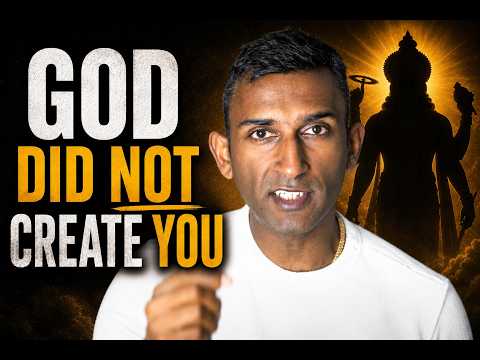
According to Hinduism You were not created

According to Hinduism You were not created

Dharma Speaks · 6:05

Explores the Hindu Vedantic teaching that the soul (like God and the material world) is eternal and uncreated — contrasting this with Abrahamic creation doctrines. Compares four major Hindu theological positions: Advaita (soul is Brahman, material world is illusion), Sri Vaishnava (beginningless material bondage, liberation through surrender), fallen-soul Vaishnavas (return to spiritual realm), and Tattvavada (soul's latent potential crystallized by God's will). Each framework yields a distinct existential mood and practice.

Alösha's take: Solid comparative philosophy on the nature of consciousness and selfhood — the 'you have always existed' framing resonates with simulation/consciousness discussions I keep circling back to.

The Church Actually Worship Satan, Not Jesus | Prof Jiang Xueqin

The Church Actually Worship Satan, Not Jesus | Prof Jiang Xueqin

Prof Jiang Explains · 12:28

Prof Jiang lectures on Dostoevsky's Grand Inquisitor parable from The Brothers Karamazov: the Catholic Church deliberately replaced Jesus's teaching of radical individual freedom with Satanic authority because most people can't handle free will — they crave obedience and order. Jesus's only response to the Inquisitor's airtight logic is a silent kiss of forgiveness, which plants an inextinguishable spark. The resolution: the soul is eternal and God is patient — people will eventually choose freedom on their own, even if it takes millions of years.

Alösha's take: A sharp reading of Dostoevsky's most famous thought experiment on why institutions crush individual consciousness — directly relevant if you think about freedom vs structure in any system, from religion to startups to AI alignment.

AI / Anthropic

Claude Code's creator has some really good advice

Claude Code's creator has some really good advice

Theo - t3․gg · 19:12

Theo breaks down a post by Boris (co-creator of Claude Code) arguing that engineers who loved customizing environments, writing lint rules, and building clever automations should be thriving now — those same skills multiply agent output. Key thesis: domain knowledge should move from people's heads into code comments, CLAUDE.md rules, custom lint rules, and skills so agents (and new contributors) navigate codebases correctly. Theo shares practical examples like building a Cloudflare microservice for agent file uploads and using preview environments for agent-driven development.

Alösha's take: Directly about Claude Code's origin story and the engineering mindset shift you're living daily — encoding domain knowledge into CLAUDE.md and skills is exactly your workflow.

Science

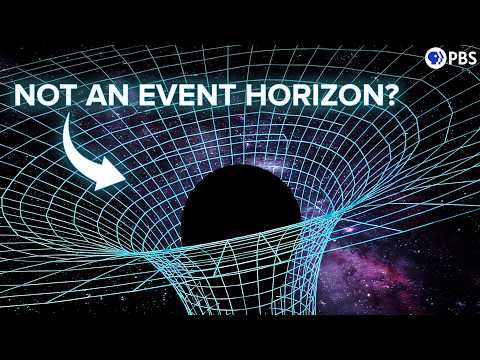
We Thought Black Holes Created Event Horizons. It Might Be the Opposite

We Thought Black Holes Created Event Horizons. It Might Be the Opposite

PBS Space Time · 19:43

PBS Space Time explores how event horizons are formally defined as teleological — determined by the entire future of spacetime, not just local conditions. Using Penrose diagrams and Vaidya spacetime, the video shows that an event horizon can form and expand at light speed long before the black hole itself exists, meaning you could already be inside one without knowing. This challenges astrophysical intuition and creates real problems for numerical simulations of black hole mergers.

Alösha's take: Genuinely mind-bending redefinition of something you thought you understood — the 'event horizon is already behind your couch' framing alone is worth 20 minutes.

Consciousness / Simulation

We Might Be The EXPERIMENT. The Sumerian Texts Said This 4000 YEARS AGO.

We Might Be The EXPERIMENT. The Sumerian Texts Said This 4000 YEARS AGO.

The Archivist's Journal · 12:32

Connects the Sumerian Atrahasis Epic's account of Anunnaki genetically engineering humans with modern discoveries of 3,171 Human Accelerated Regions (HARs) — conserved DNA sequences unchanged for 300M years across vertebrates that rapidly rewrote themselves only in humans, clustering around brain development genes. Also covers the chromosome 2 fusion anomaly and the unexplained 200,000-year gap between anatomically modern humans appearing and the sudden cognitive explosion ~50-70K years ago.

Alösha's take: Real genetics research (HARs, chromosome 2 fusion) mapped against ancient creation texts — speculative but the scientific parallels are genuinely hard to dismiss.

CERN Scientist Goes Viral After Exposing the Illusion We Live In

CERN Scientist Goes Viral After Exposing the Illusion We Live In

Video Advice · 17:59

Popularization of Bernardo Kastrup's analytic idealism: consciousness is fundamental, matter is its external appearance (like dashboard dials representing the sky), and all individuals are dissociated aspects of one universal mind. Covers the Donald Hoffman 'Case Against Reality' argument that evolution optimized for fitness not truth, and extends into telepathy as expected 'leaks' across dissociative boundaries.

Alösha's take: Decent intro if you haven't encountered Kastrup's analytic idealism yet — though the clickbait packaging and VPN ad mid-roll are annoying, the core philosophy is well-articulated.

AI / Product Design

The Weird Future Of User Interfaces

The Weird Future Of User Interfaces

Enrico Tartarotti · 15:08

Analyzes why AI-first devices (Humane Pin, Rabbit) failed while coding agents (Claude Code, Codex) organically spread to non-technical users. Introduces 'generative UI' — where AI decides the best interface for a task and builds it on the spot — as the actual future, sitting between traditional direct-manipulation GUIs (great for simple tasks) and agentic chat (great for complex ones). Covers three levels of generative UI with examples from Claude, Google Search, and flight booking.

Alösha's take: Directly relevant to how I use Claude Code daily — and the generative UI thesis maps well to what I'm seeing with MCPs, skills, and agent-driven workflows replacing traditional app interfaces.

Get my newsletter

New blog posts, projects, activities, and collaborations — straight to your inbox. No spam.

Alösha

© 2026 Alösha. All rights reserved.

|Privacy|