Unexpected Bavaria
A brief note about moving to Munich from Kharkiv.

Life offers us interesting opportunities. Some opportunities can fundamentally change it. For example — an offer to relocate to Germany.
Making such a decision is not easy. To leave everything you have behind: your home, your familiar lifestyle, your family, your friends — that's a big step. It's much easier to commit to such changes if you've already moved before. Even more importantly — what awaits you in another country? It looks like a road disappearing into the fog. What happens — nobody knows. You can speculate and imagine a lot, you can ask emigrants, read blogs. All of that will be imaginary and will not compare to what you already have. The only way to find out how it will really be is to decide. It's easier for curious and enterprising explorers to make such a decision.
The visa is obtained, the plane ticket is purchased. Departure.
Expectations and Reality
Germany. Many from school days wanted to avoid this country and its language. France, Italy, Spain would be so much better. Anywhere, but not Germany. The language of love in the most romantic city. Or the Colosseum, pizza, pasta. Or bullfighting, flamenco, and tangerines.
Back to Germany. Those not passionate about German language and culture get only pop-culture scraps: the infamous Rammstein, pornography, underground and alternative culture, graffiti in Berlin, and jokes about German punctuality. The language is perceived as harsh and grating:
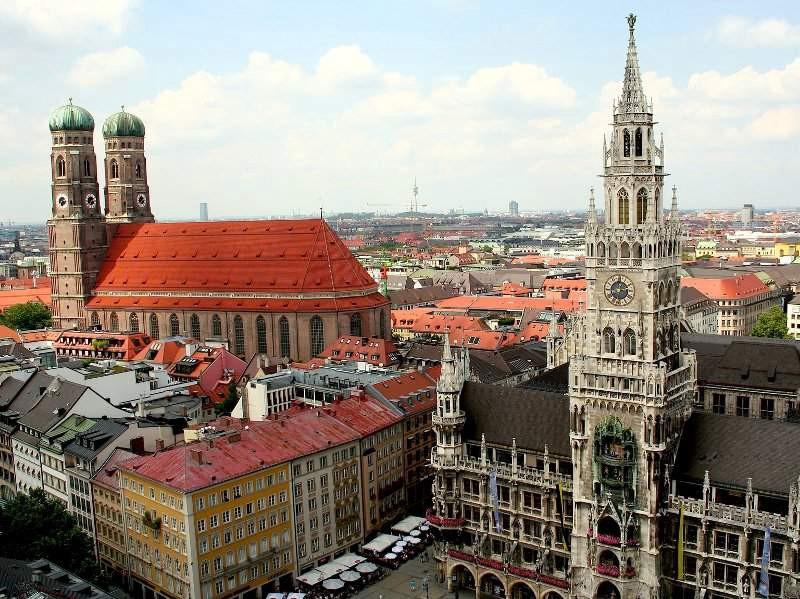
What is Germany really like? Munich — this is a completely different Germany. This city pleasantly surprises: cleanliness, even roads, architecture, BMW, beer, metro.
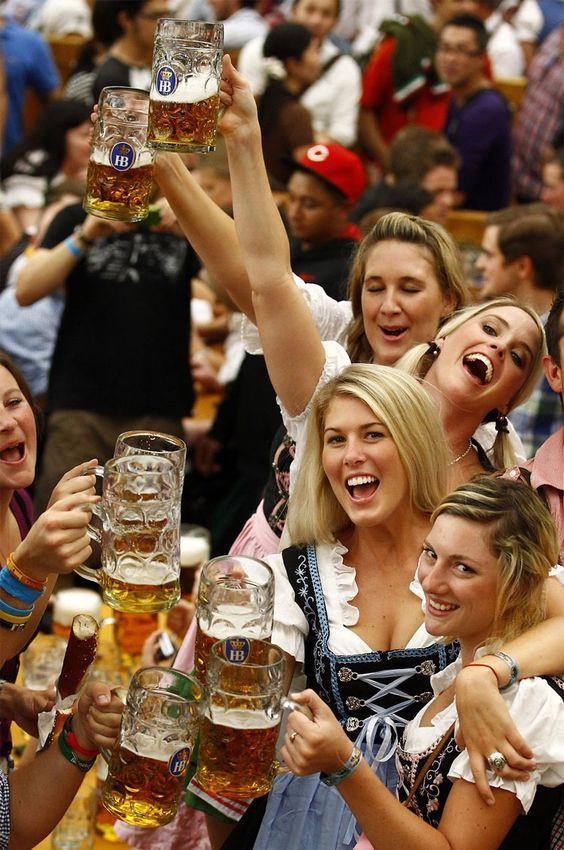
Bavarians will soon make their presence known. A group of cheerful Bavarians heading to celebrations stand out brightly among other metro passengers. Especially in winter.
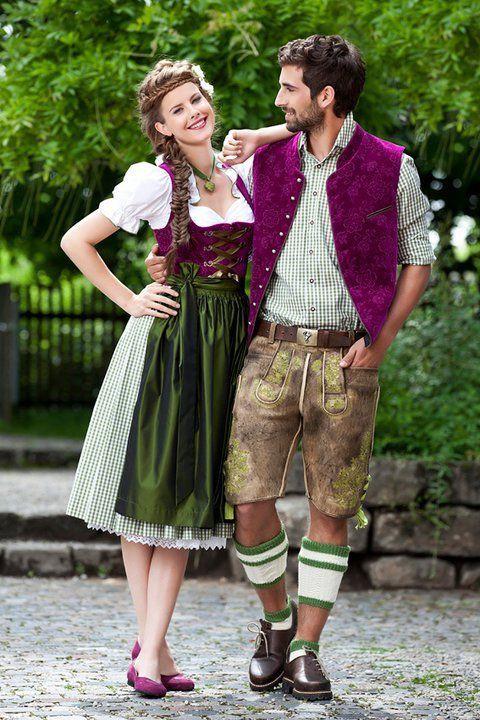
The Bavarian traditional costume — dirndls and leather pants — is the main formal wear in Bavaria. Especially at the Oktoberfest beer festival. During the festival, thousands of tourists dress up and indulge in beer revelry throughout the city. During this time, the city is unrecognizable. Bavarians love traditions, festivals, fairs, live music, beer, and meat.
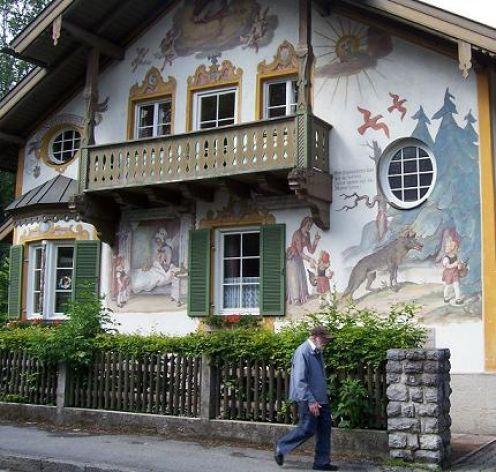
It's easy to find yourself in a Grimm's fairy tale — leave Munich and head south, stop in a small village. Here, each little house is painted in its own unique style and immerses the observer in a fairy-tale atmosphere.
We pass through this small village and a breathtaking view opens before us — mountains. Just 2 hours from Munich. Standing at the foot of the mountains, you feel their grandeur. The mountains challenge everyone who passes by. In winter — ski or snowboard down, in summer — climb to the summit and enjoy delicious Bavarian beer.
German Language
Residents of European countries love their language and are in no hurry to learn English. Germany is no exception. Bavarians especially. Without knowledge of German, you won't even open a bank account. You can find people who speak English, but not always. There aren't many of them. And they love to take vacation. Sometimes at the most inconvenient time.
They recommend watching television and films in German. Supposedly you'll get used to it and start remembering whole phrases and expressions. Maybe that's how it is. Only, if there is motivation and strength to overcome your sleepiness and fatigue from an unfamiliar language and chaotic, unpleasant-sounding set of sounds. If you don't have an inner desire to learn the language, then motivation to learn may come from outside. If your colleagues are German and your boss asks everyone to speak only German, arguing that it's in your interest — to learn the language and integrate. Time passes and you realize that without courses, you won't go far — you need a guide in an unfamiliar language where you feel like a drop of consciousness in an ocean of countless words, phrases, constructions, and expressions. Even one course will provide an excellent foundation for self-study. If this course is not the only activity in your life, then you'll need to find the strength to struggle with the aforementioned sleepiness and fatigue.
German doesn't come easy. It's easier to motivate yourself by surrounding yourself with Germans who communicate with each other, and when you increasingly want to understand what they're talking about. Understanding them is not easy, because culture and worldview are different. And what stress you experience when someone addresses you and you can't make out half the words and don't know what to answer. Such beneficial stress helps you remember important words. Not from a book, but truly important survival expressions. Time passes, you live surrounded by Germans, try to communicate, correspond with them, watch films in German, listen to music, and imperceptibly for yourself, you learn more and more words and start to understand whole phrases. The hardest part at first is to understand the context of a conversation if you're not in the know.
If you allow people around you to speak English to you, then forget about your German. But limiting yourself to German, you condemn yourself to loneliness and emptiness. The more you understand, the more you are immersed in what's happening around you.
Friends
Friends. Sometimes it seems like you live here and now and you have friends. You move to another city — you get new acquaintances. You move to another country and realize that friendship is a phantom concept. They seem to exist, but the farther you are from each other, the less your connection becomes. Over time, you stop understanding each other and drift apart.
New acquaintances in a new country become more numerous over time, but those who could replace friends somehow never appear. And where to look for these new friends? There are many different social networks where you can find interest groups, sports clubs, and bars.
Being an immigrant makes finding friends much harder. Differences in cultures, in personal experience, in worldview, in life values and priorities can be so great that making friends will be practically impossible. Or it will simply be uninteresting to be with each other. Very often you make new acquaintances at stammtishs or board game clubs. Such meetings are very popular in Germany. At first, you think this is a great opportunity and you'll soon have many friends. Over time, you get bored with the monotony. Same questions, the same people, the same activities. And the herd nature of such events will interfere with your plans to make friends. To get closer to a person, you need to be alone with them, experience something unique together. But such events imply that everyone communicates with everyone and you have no guarantee that your interlocutor will stay with you the next minute, rather than run off under the influence of new circumstances.
Want to make friends — take matters into your own hands. You start with yourself. To become an interesting person, you start exploring what you like, want to become interesting to yourself. You try something new every day. Meeting another person, you use every opportunity to communicate in person, so that no one and nothing distracts you from your conversation.
Friends will appear over time. At first, it will be very lonely if you simply stay home and don't go out.
Let's Discuss?
What is your relocation story? What else would you be interested in reading about?
Have thoughts about this post? Let's discuss it on X!

Alösha
Building community platforms, teaching salsa, writing to find my people.