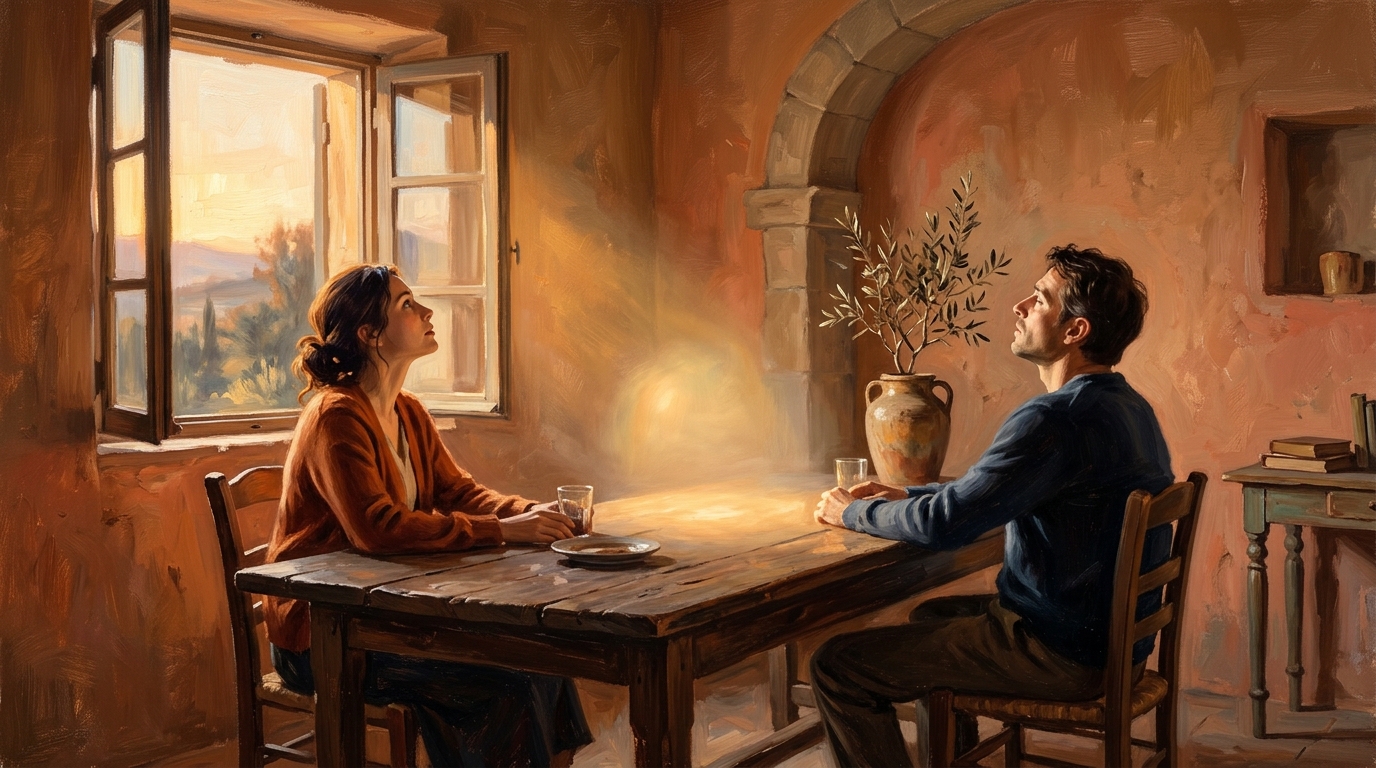
We Believe in God Because We Are Afraid to Understand Each Other
Maybe we did not invent God because we could not find him, but because we could not bear closeness to each other. What if the fear of the other person is the less obvious — but real — source of faith?
There is a common opinion that a person turns to God out of fear of death. Others believe that religion is born from helplessness before nature, loneliness in the universe, or a thirst for justice. But perhaps there is one more, less obvious source of faith: the fear of another human being.
We have lived next to each other for the entire history of humanity, and yet we remain mysteries to one another. We can study stars, split atoms, build artificial intelligence — and still fail to understand the person sitting across from us at the same table. Real understanding asks more of us than knowledge. It asks us to let go of our own rightness, to see the world through someone else's eyes, and to recognise that the other person has the same depth as we do.
That is exactly what we fear.
To understand another person means to let in their pain, their contradictions, their freedom. It means giving up convenient labels and ready-made explanations. It is easier to turn a person into the representative of a group, the carrier of an idea, or an enemy than to acknowledge their uniqueness. It is easier to love humanity in general than to love a specific person with all their flaws.
In this sense, the idea of God can act as a mediator between people. Instead of seeking each other, we seek something higher. Instead of building bridges between consciousnesses, we turn our gaze to the sky. God becomes the common language where we have lost the ability to speak to one another directly.
Maybe that is why religious arguments are so often so ferocious. Behind them lies not only the question of God's existence but the question of whether human mutual understanding is possible at all. When people cannot meet each other, they meet around symbols. When they cannot share a common reality, they create a common faith.
This does not mean God is an illusion or a fiction. It is something else: even if God exists, our image of him may be tied to the human difficulties we are trying to overcome. Perhaps into the image of God we pour the hope for an understanding we cannot find among people.
The paradox is that many spiritual traditions arrive at the opposite conclusion. They say the path to God runs through another person. Love of the neighbour, compassion, forgiveness, attention to someone else's fate — these are seen as the highest forms of religious experience. If that is true, then the fear of understanding another person becomes, at the same time, the fear of drawing close to God.
The problem turns out to be not theological but human. The question is not whether God exists, but whether we can bear the encounter with each other. The hardest revelation may not be a voice from the heavens but a stranger's gaze. Not the sacred text but an honest conversation. Not the search for absolute truth but the recognition of someone else's human truth.
And if one day people learn to truly understand each other, they will either stop needing God as a mediator — or discover him precisely where they never looked before: between themselves.
Join the discussion on Telegram!

Alösha
Building community platforms, teaching salsa, writing to find my people.