Dancing With AI: What If the Best Interface Is Your Body?
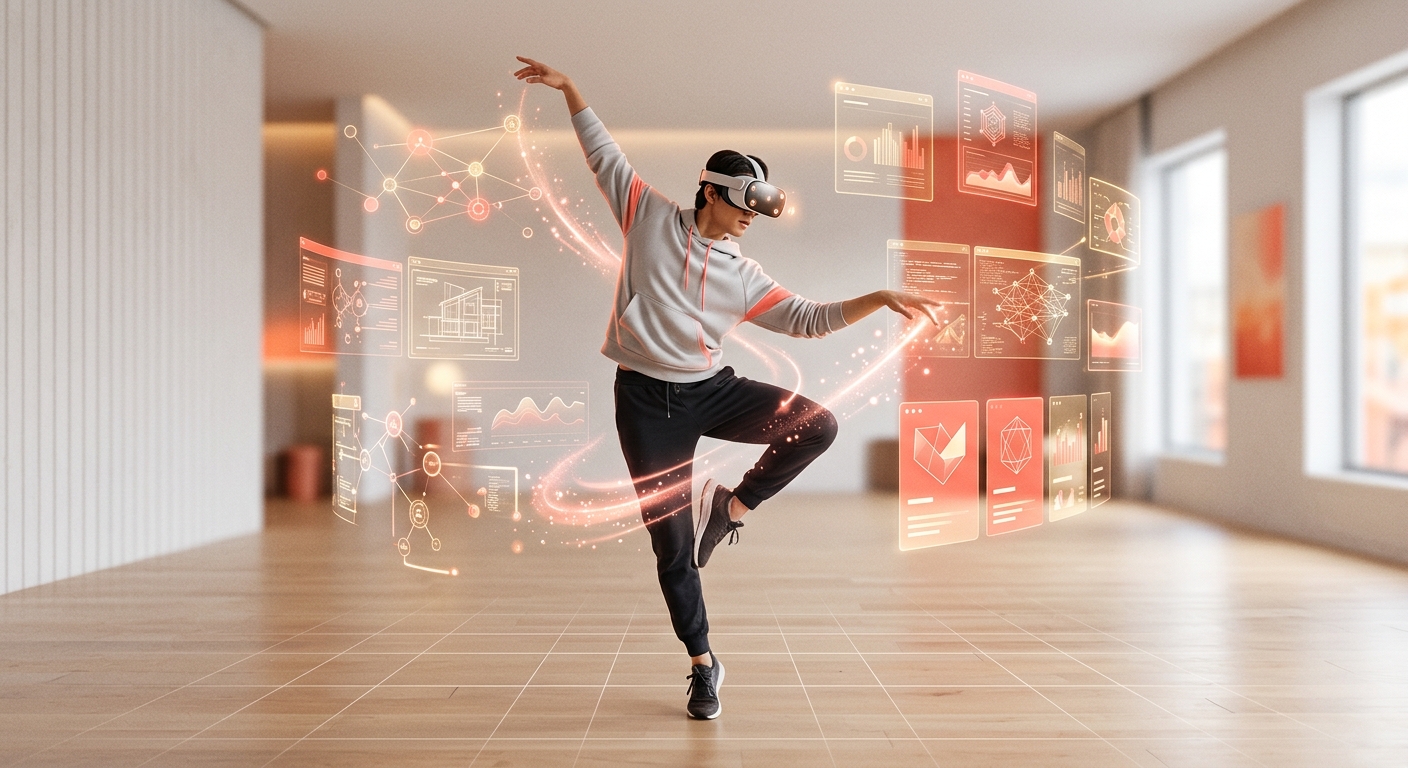
One monitor isn't enough. I need space to think — real, physical space. What if the next interface isn't a screen but a dance floor where prompts are spells and movement is meaning?
One monitor is not enough. Two monitors are not enough. What I actually need is space — real, three-dimensional space to think in. I've been feeling this for a while now, and I think the best interface for AI might be virtual reality. Maybe I need to buy an Apple Vision Pro. Maybe I need to test something else. But the flat screen era feels like it's running out of room.
I Already Know This From Dance
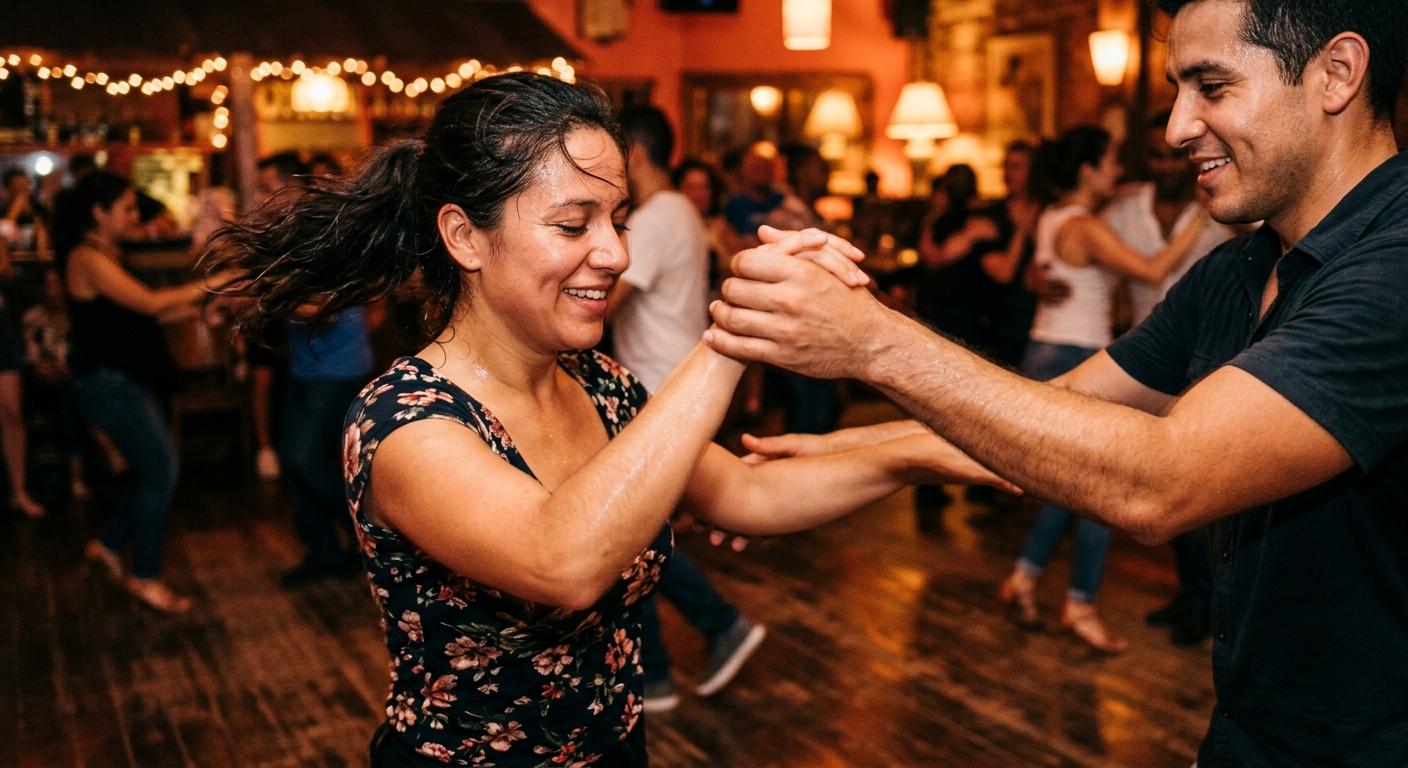
Here's the thing — I've been teaching Cuban salsa for years. On the dance floor, you don't think about steps. Your body knows where to go. Muscle memory takes over. You feel the music, you feel your partner, and the right move just happens. You've rehearsed the routine so many times that navigation becomes unconscious, and all your attention goes to the connection.
Now imagine that same feeling, but for work.
Muscle Memory as Navigation
You're standing in a virtual workspace. Every project lives somewhere in the space around you. You step forward — that's your current task. A fast move to the right — you're in a different project. Your body remembers the moves. No file trees. No tab switching. Just muscle memory getting you to the right place.
It's choreography for knowledge work. Each move means something. You come forward, and something is here. Then you do a quick turn and you're somewhere else entirely. You remember the moves the same way a dancer remembers a routine — not in your head, but in your body.
Speak and It Appears
Now layer in AI. You speak, and an interface appears in front of you — right there, at that spot in space. You walk to a new position, speak again, and a different tool shows up. The interfaces stay where you summoned them, like objects left on a workbench.
This is a generative environment. Nothing is pre-built. Everything appears on demand through conversation. We speak faster than we type. We click and move faster than we speak. And we dance faster than all of it.
Typing is also a kind of dancing, if you think about it — fingers moving in learned patterns across keys. Vim users know this. Dvorak users know this. But it's dancing constrained to a tiny surface. VR removes that constraint. Your whole body becomes the input device.
Minecraft for Thinking
Think Minecraft, but for productivity. You have one object here, another object there. You pick them up, compare them, merge them, fork them. The environment reshapes itself around what you're building.
It reminds me a little of that scene in Loki — the TVA, where they can see timelines branching and touch them with their hands. That feeling of standing inside information and reaching into it. Except here, you're building the timelines yourself.
Prompts Are Spells
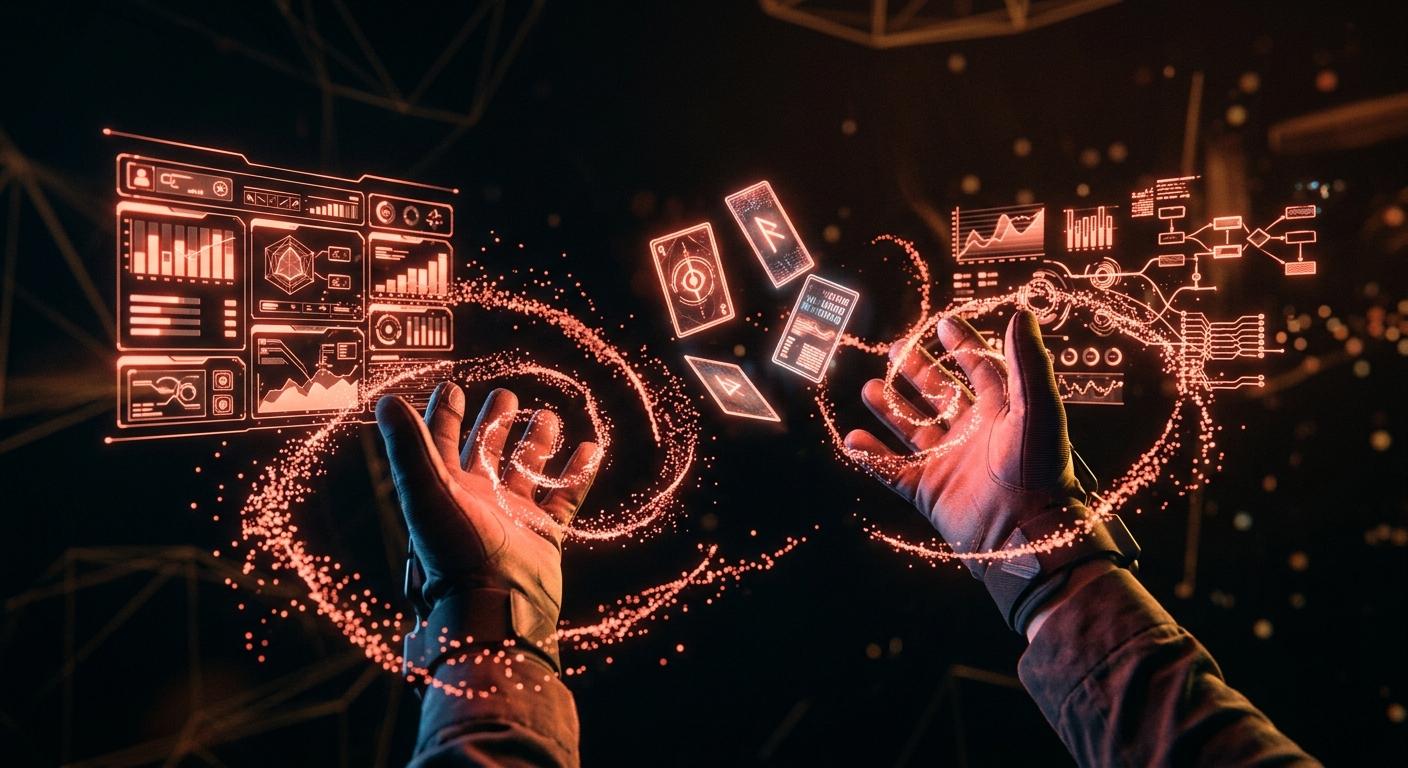
Here's where it clicks: prompts are spells, and they create artifacts.
You speak — and something materializes. A dashboard. A draft. A data visualization. These are artifacts, conjured through language and shaped through movement. Your workspace becomes a spell book, and every corner holds something you've summoned before.
I think we're building a magic system. Not a software interface. A magic system.
What If
What if I could walk into a room and see all my projects floating around me — WeDance over here, a blog post draft over there, a code review behind me? What if switching context was literally turning around? What if every AI conversation left a physical trace in space, so coming back tomorrow means walking through yesterday's thinking?
Every session leaves traces. Every return trip starts with familiar landmarks. The environment accumulates your thinking like a dance studio accumulates the echo of every rehearsal.
The Magic World
We're building something that doesn't have a name yet. It's not an app. It's not an OS. It's a place — where language creates reality, movement is meaning, and the interface is your body.
Prompts are spells. Outputs are artifacts. And I think the people using them won't be called users anymore.
I need to note this down. I think we're building the magic world here.
Join the discussion on Telegram!

Alösha
Building community platforms, teaching salsa, writing to find my people.


You might also like
I Asked AI "Why Do I Exist?" — Here's What Happened
How a two-hour conversation with AI became my life operating system — from finding my ikigai to testing a business hypothesis at a dance festival.
AI Secretary: What If You Let AI Tell You What to Do Next?
I stopped managing tasks in Jira and built an AI that knows my projects, my priorities, and my next move. Here's how it works and the seven rules I actually follow.