Thought Waterfall: When Ideas Arrive Faster Than You Can Catch Them
There's a state where one idea triggers the next, which triggers the next, and suddenly you're drowning in connections. I call it Thought Waterfall. Here's how free writing and AI sub-agents trigger it — and how it differs from flow.
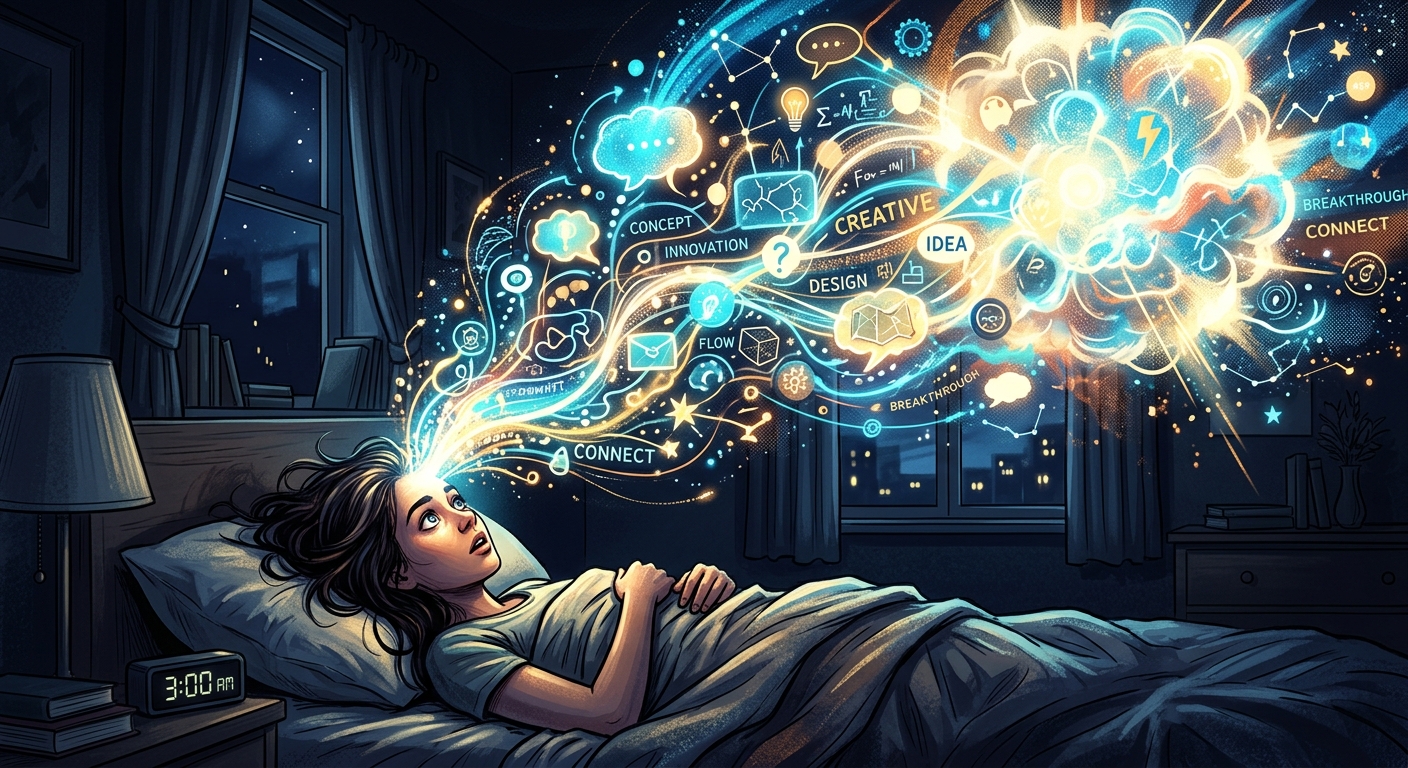
I woke up at 3:45 AM last week with my brain on fire. Not anxiety — ideas. One thought about a project triggered a connection to another project, which triggered a design pattern, which triggered a name for the whole thing, which triggered three more ideas. They were arriving faster than I could reach for my phone to write them down.
This has happened to me before. I call it Thought Waterfall.
The First Time
About ten years ago, I started practicing free writing — brain dumps. You sit down, set a timer, and write without stopping. No editing, no filtering, no going back. Whatever comes out, comes out.
Something unexpected happened. I'd write an idea down, read it back, and that sentence would trigger another idea. That one triggered a third. Within minutes, I wasn't writing anymore — I was chasing a cascade of connections. Ideas were linking to other ideas I hadn't thought about in months, and suddenly everything was connected.
I later discovered this had a name — or at least a framework. Edward De Bono's lateral thinking, which I found through Vitaly Kolesnik's work on kolesnik.ru. De Bono's core insight is that the brain is a self-organizing system that follows established patterns. Lateral thinking techniques — free writing, catena mapping, linguistic pyramids — deliberately disrupt those patterns.
Thought Waterfall, I think, is what happens when multiple disruptions cascade simultaneously. The brain starts finding unexpected connections faster than conscious thought can track.
It's Not Flow
People sometimes hear this and say, "Oh, you mean flow state." I don't. They feel completely different.
Flow is calm. You're deep inside one task, time disappears, and you produce steadily. It's single-threaded. You're doing one thing, and doing it well.
Thought Waterfall is the opposite of calm. It's exciting — almost overwhelming. Multiple threads of thinking collide at once. One idea strengthens another, which spawns a third, and they all connect in a burst. The output isn't steady production — it's a flood of interconnected ideas arriving all at once.
The risk is different too. In flow, you lose track of time. In Thought Waterfall, you lose ideas — they arrive faster than you can capture them, and the fear of forgetting creates this urgent energy.
The AI Trigger
Here's where it gets interesting. The state came back recently — stronger than before — and the trigger was AI sub-agents.
I've been working with a system where I can launch AI agents to handle tasks in parallel. I write a prompt, send it off, and while it's running, my mind keeps processing. "How could this connect to that other thing?" Then the agent returns results, and those results spark new connections. I launch another prompt. The cycle accelerates.
It works because AI closes the gap between idea and execution. Normally, you have a thought and it goes into a queue — a to-do list, a backlog, a "someday" note. Most ideas die there. But when you can immediately externalize an idea as a prompt and get a result back in minutes, the thought doesn't die. It transforms into something concrete, which frees your mind for the next one.
The AI becomes a thinking partner that keeps pace with the waterfall. And each returned result is fuel for the next cascade.
The Problem
Everything feels brilliant during a Thought Waterfall. Every connection seems profound. Every idea seems like the one that changes everything.
Then you review your notes the next morning and realize: some of it is genuinely good. Some of it is nonsense. And some of it is an interesting seed buried in excited rambling.
The state also doesn't respect your schedule. It activates at 3 AM. It keeps you up. The intensity is unsustainable — the high is followed by a crash if you don't manage it.
How I Handle It
I've learned that the state needs two separate systems: one for during, one for after.
During the waterfall — frictionless capture. The goal is to catch enough of each idea to reconstruct it later, not to fully articulate it in the moment. Voice notes are the fastest — I grab my phone and talk. Bullet points work too. Full sentences don't. If you stop to write proper paragraphs, you'll lose three ideas while capturing one.
After the waterfall — process with a clear head. The next morning, I go through everything I captured and apply a filter. Which ideas survive scrutiny? Which ones were just the excitement talking? The good ones get routed into projects. The rest go to archive.
It's basically GTD for creative bursts. Collect everything in the moment, clarify later.
Triggering It On Purpose
I can't force it, but I can create conditions where it's more likely to happen:
- Morning free writing. Ten minutes, no filter, no editing. This was the original trigger and it still works.
- Working with AI sub-agents. Launching parallel tasks creates the right kind of gap — your mind keeps generating while waiting for results.
- Cross-pollinating projects. The state happens most when I'm working across multiple projects. Ideas from one domain collide with ideas from another.
The common thread is removing friction. Anything that lets ideas flow without the brain's editor intercepting them seems to help. The moment you start judging an idea, the waterfall stops.
Why I'm Writing This
Partly because I want a name for it. "I had a creative burst" doesn't capture the experience. It's not a burst — it's a waterfall. Ideas cascading, each one triggering the next, gaining momentum as they fall.
But mostly because I think AI is going to make this happen to more people. When the gap between "what if" and "let's see" shrinks to minutes, the brain has permission to generate freely. And some brains, when given that permission, don't just generate — they cascade.
If that's happening to you: grab a voice recorder. Don't try to organize in the moment. Just catch what you can, and sort it out tomorrow.
The waterfall is a gift. You just need a bucket.
Have thoughts about this post? Let's discuss it on X!

Alösha
Building community platforms, teaching salsa, writing to find my people.
You might also like
Dancing With AI: What If the Best Interface Is Your Body?
One monitor isn't enough. I need space to think — real, physical space. What if the next interface isn't a screen but a dance floor where prompts are spells and movement is meaning?
AI Secretary: What If You Let AI Tell You What to Do Next?
I stopped managing tasks in Jira and built an AI that knows my projects, my priorities, and my next move. Here's how it works and the seven rules I actually follow.
6 Thinking Hats
Six Thinking Hats is a system designed by Edward de Bono which describes a tool for group discussion and individual thinking